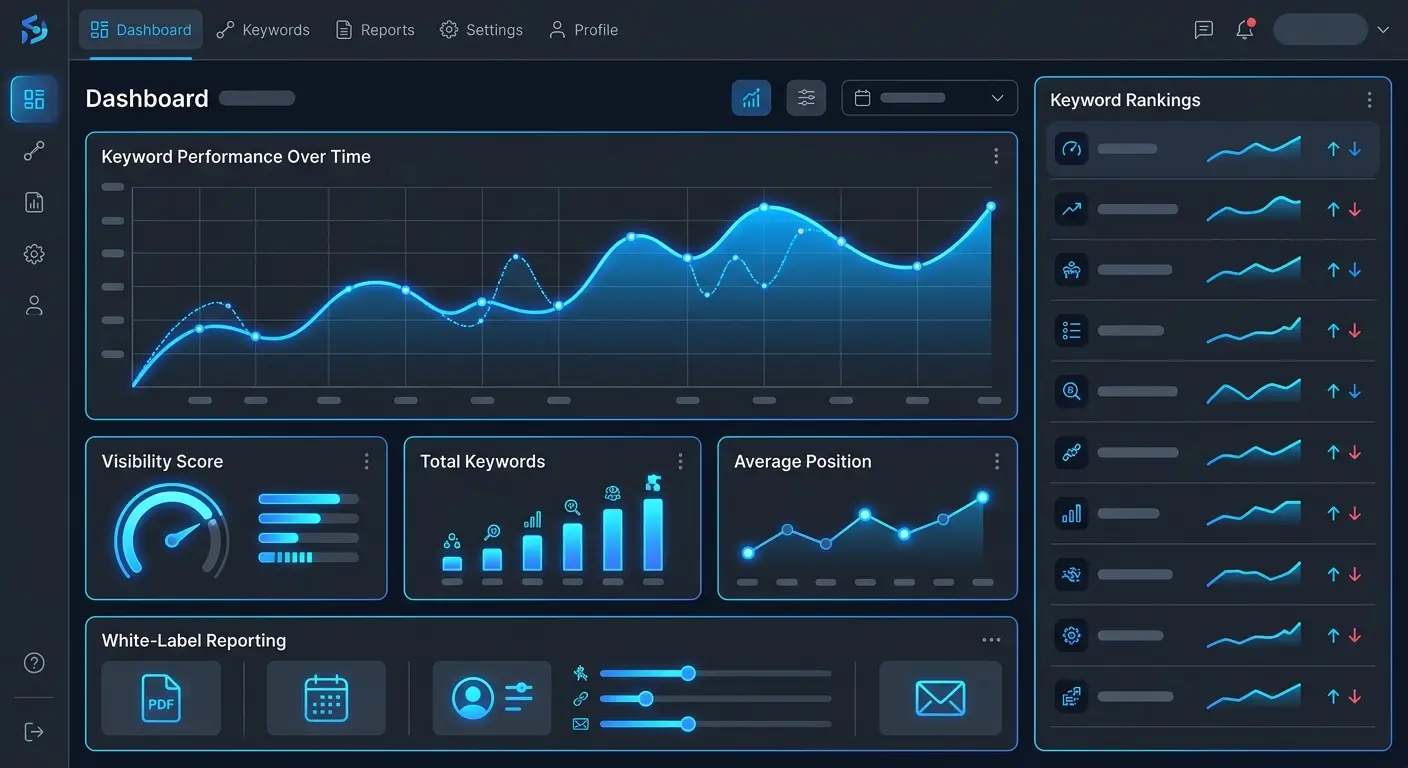
Automated Rank Tracker Software Reporting Features
Manual SEO reporting is a notorious time-sink, frequently trapping growth-focused marketers in spreadsheets instead of executing high-impact optimization strategies. Unlocking the full potential of advanced automated rank tracker software reporting features changes the game, instantly transforming complex search data into clean, client-ready insights with zero manual heavy lifting. In this guide, we dive into the must-have capabilities—from dynamic white-label dashboards to real-time SERP volatility alerts—that modern digital teams rely on to scale their operations. Discover how the right reporting stack can streamline your workflow, impress your stakeholders, and consistently prove clear SEO ROI.
Automated rank tracker software reporting features are programmed capabilities within SEO platforms that crawl search engine results pages (SERPs), record keyword rankings, and automatically package those visibility shifts into recurring, client-ready reports without manual effort.
Manual ranking updates waste valuable hours for growth-focused marketing teams and agencies. Scraping SERPs by hand is slow and prone to errors. Advanced reporting tools eliminate this friction. They combine smart keyword tracking, visibility score trends, and real-time SERP performance tracking into unified views. Modern platforms deliver scheduled rank updates and automated SEO audits directly to decision-makers. Solutions like Scalnex use AI automation engines to give businesses hands-off rank intelligence and predictable organic growth.
Must-Have Automated Rank Tracker Software Reporting Features
Modern marketing stacks require data precision, visual clarity, and multi-channel delivery. Selecting the best automated keyword rank tracker for client reporting requires identifying core functional elements:
- Instant SERP shift notifications: Trigger automated alerts via webhooks or messaging tools the moment critical commercial keywords enter or drop out of top-three positions.
- White-label automated client reporting: Deploy professional white label rank tracking reporting tools that feature custom agency branding, domain masking, and bespoke executive summaries.
- Geo-targeted rank tracking: Monitor search performance with local precision across targeted metropolitan territories such as Delhi or broad international markets.
- Competitor rank movement benchmarks: Track visibility changes alongside rival domains using integrated competitor intelligence modules to capture market share trends.
- AI-powered search intent insights: Categorize keyword movements by informational, commercial, or transactional intent to project true revenue impact.
- Multi-channel report scheduling: Leverage scheduled SERP rank tracking email reports and automated Slack exports to keep stakeholders aligned without logging into a dashboard.
Comparing Automated Rank Tracker Reporting Methods: Manual vs. AI-Powered
Evaluating your tracking stack requires comparing manual labor against traditional database tools and modern AI-driven automation workflows.
| Criteria | Manual Spreadsheet Tracking | Legacy Tools | Scalnex AI Automation |
|---|---|---|---|
| Tracking Frequency | Manual weekly or monthly checks | Standard 24-hour batch crawls | Real-time continuous SERP polling |
| Geo-Precision | Limited to local browser cache | National or zip-code presets | Hyper-local coordinate and city-level targeting |
| Report Generation Speed | 3 to 6 hours per account | 15 to 30 minutes of manual filtering | Zero-click automated report dispatch |
| Cost per Tracked Keyword | High labor expenditure | Rigid tier limits with steep overages | Scalable, cost-effective infrastructure |
| Automated Action Items | None; requires manual interpretation | Basic threshold notifications | AI-generated optimization directives |
Core Reporting Metrics Matrix
| Reported Metric | Description | Reporting Frequency | Commercial Retention Impact |
|---|---|---|---|
| Search Intent Visibility | Categorizes ranking changes across informational and transactional queries. | Weekly analysis | High; justifies pipeline and conversions. |
| Device Breakdown | Compares mobile versus desktop SERP performance discrepancies. | Bi-weekly audits | Moderate; guides responsive design choices. |
| Local Pack Ranks | Tracks top-three map visibility across regional geographies. | Daily tracking | Critical; drives direct calls and foot traffic. |
| Share of Voice (SOV) | Calculates total organic search presence relative to direct competitors. | Monthly synthesis | High; proves overarching brand authority. |

Scale Your Organic Intelligence with Scalnex
Choosing modern automated rank tracking features frees digital teams from tedious administrative reporting. According to search documentation from Google Search Central, search results continuously evolve across locations and devices. Marketers need automated tools to capture these fluid shifts. An automated SEO reporting dashboard software gives you instant visibility across local regions like Delhi as well as global SERPs.
Agencies, e-commerce stores, and SaaS businesses need clean reporting to retain clients and drive revenue. Modern teams can eliminate manual exports, leverage customizable keyword position reporting features, and deliver high-impact organic insights. Take your performance intelligence to the next level and request a customized inbound demonstration with Scalnex today.