Automated Rank Checking vs Manual Search Console
Relying solely on delayed reporting costs you organic visibility before you even detect the drop. When analyzing **automated rank checking vs manual search console checks**, the core issue comes down to data latency versus operational bandwidth. Google Search Console provides indispensable first-party verification, but its built-in data lag and lack of geo-specific precision leave critical strategic blind spots. This guide dissects the architectural trade-offs between continuous rank tracking engines and manual console audits, showing you precisely how to build a responsive, scalable monitoring pipeline.
Automated Rank Checking vs Manual Search Console Checks: Direct Answer
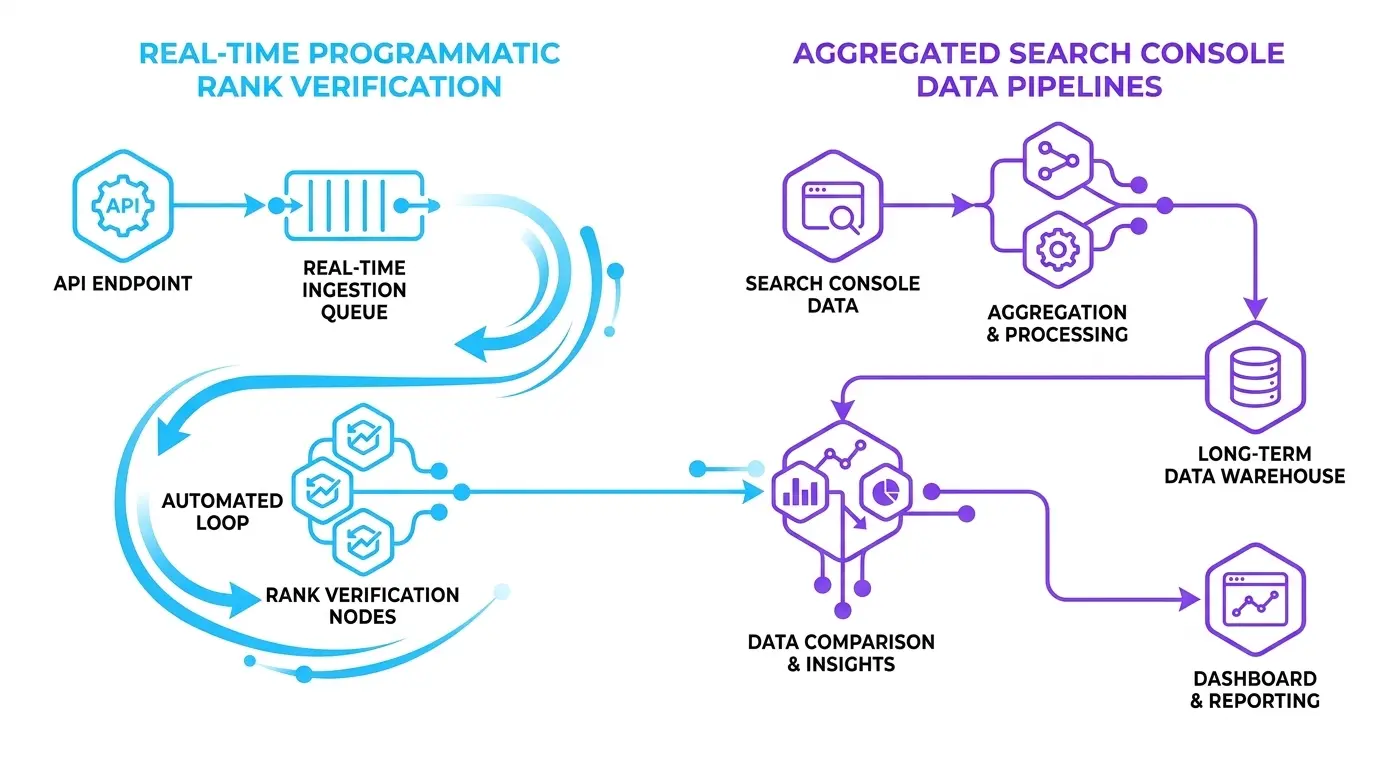
When comparing automated rank checking vs manual search console checks, automated rank tracking provides programmatic, point-in-time SERP data extraction that eliminates personalization biases, whereas Google Search Console delivers historical, aggregate impression data burdened by a 48-hour latency window. Dedicated rank tracking software tracks exact document positions on clean, geo-targeted SERPs, while Search Console records blurred mathematical averages across volatile user environments.
- Latency Discrepancies: Automated tools query live SERPs instantaneously, whereas Google Search Console updates with a 48-to-72-hour reporting delay that masks sudden ranking drops.
- Environment Neutrality: Headless automated scrapers execute queries via localized proxies, while manual browser checks suffer from personalized search history, IP geolocation, and cache distortion.
- Impression Thresholds: Google Search Console suppresses low-volume search queries under privacy thresholds, obscuring emerging keyword movements that automated rank checking captures immediately.
- Operational Actionability: Manual console inspections create reactive diagnostic bottlenecks, while automated keyword pipelines integrate directly with remediation workflows and modern rank tracking software.
Evaluating Search Tracking Architectures: Operational Comparison
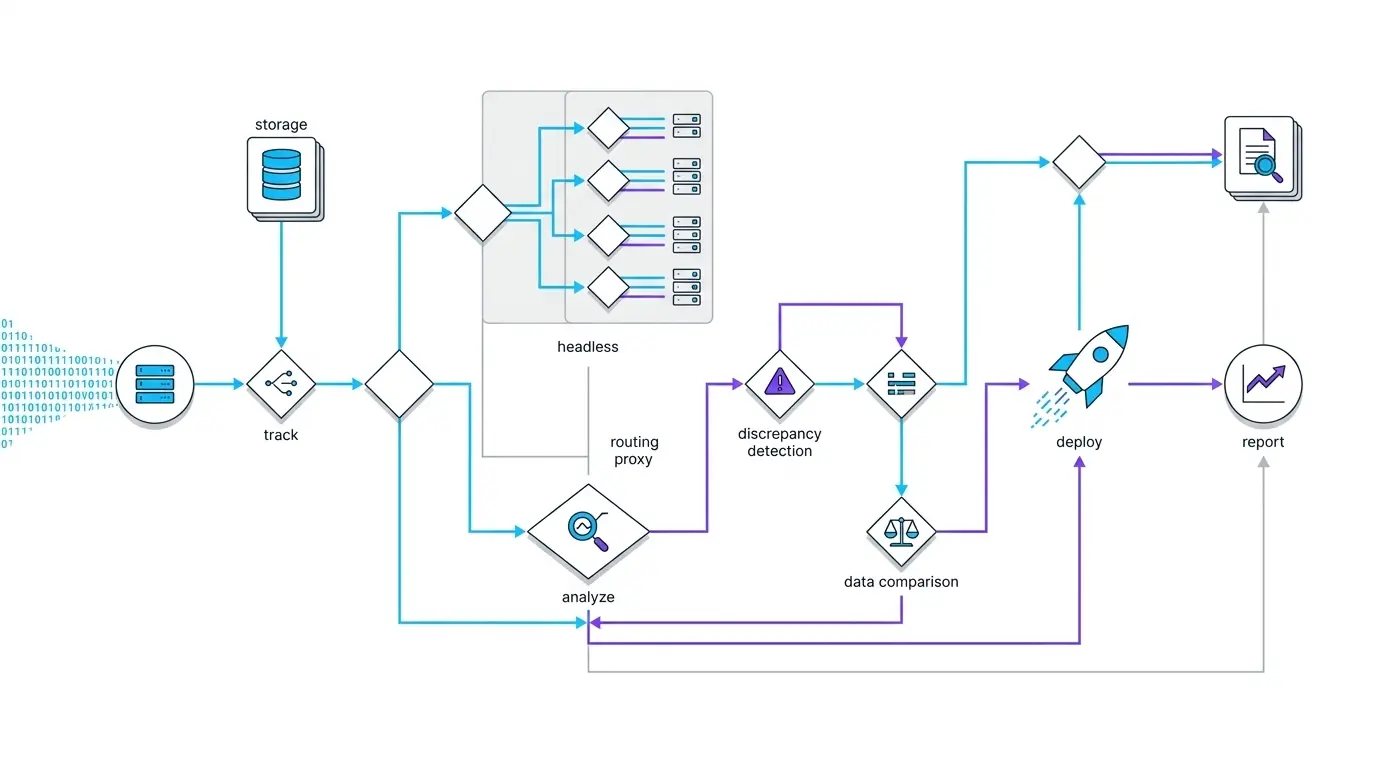
Selecting an effective search monitoring architecture requires evaluating data latency, scraping fidelity, team overhead, and immediate remediation speed across competing toolsets.
| Evaluation Metric | Manual Google Search Console Checks | Legacy Diagnostic Rank Trackers | Autonomous AI Execution (Scalnex AI) |
|---|---|---|---|
| Data Freshness & Latency | 48-72 hour reporting lag | 12-24 hour batch queue processing | Real-time programmatic SERP verification |
| Query Capture Scope | Restricted by impression privacy thresholds | Fixed manual keyword tracking lists | Dynamic query fan-out and entity tracking |
| Environment Neutrality | Skewed by local IP, cookies, and VPNs | Standard rotating data center proxies | Localized headless browser proxy grids |
| Resource Drag & Cost | High manual audit debt and analyst drag | Passive dashboards requiring costly manual triage | Zero-touch autonomous execution and free automated SEO software workflows |
| Actionability | Zero native execution capability | Static email alerts and CSV export logs | Direct programmatic remediation pipelines |
While Google Search Console provides indispensable first-party verification for trailing impressions, relying solely on manual console audits leaves growth teams blind to intraday rank shifts. Leveraging automated rank tracking software ensures unbiased data extraction and provides the velocity required to safeguard commercial SERP positions.