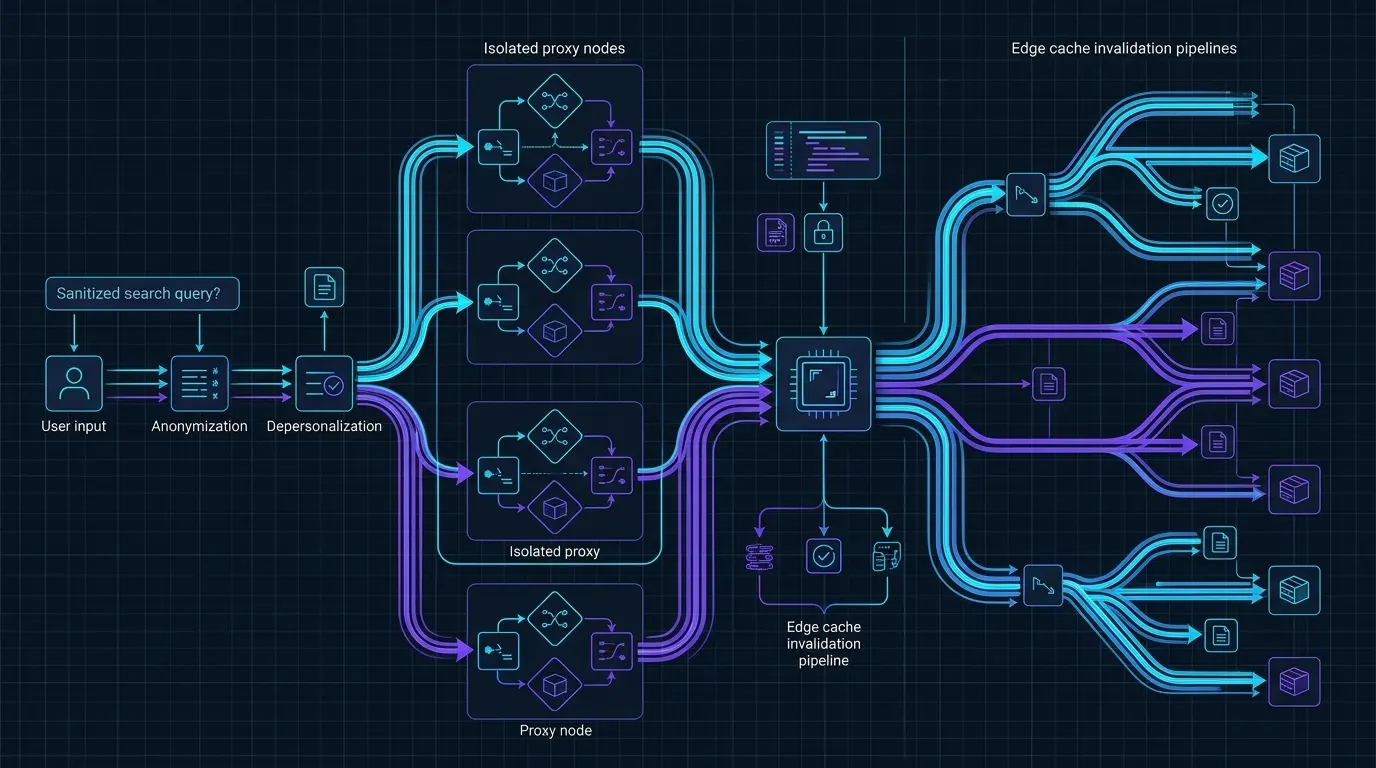
Check Google Ranking Without Cache Bias: Exact 2026 Audit
Your browser is actively corrupting your performance metrics. Stored cookies, browsing history, and persistent session tokens continuously distort SERP reality, forcing engineering and marketing teams to make high-stakes architectural decisions based on phantom positions. If you rely on unverified search results, your optimization strategy is built on noise; you must master how to check google ranking without cache bias. This guide outlines the exact network-level protocols, private session parameters, and programmatic verification frameworks required to bypass personalization and extract absolute ground-truth SERP data.
How to Check Google Ranking Without Cache Bias: The Direct Protocol
To learn how to check google ranking without cache bias, you must decouple search queries from local browser storage, GPS geolocation headers, and historical session IDs. Modern search engines synthesize client-side cookies and historical entity affinity to tailor SERP layouts. Manual browser searches display self-reinforcing confirmation loops rather than true baseline index positions.
- Browser storage isolation: Purge all local client storage, cookies, and active service workers before querying.
- Geolocation overrides: Strip regional IP bias using coordinate emulation or neutral proxy endpoints.
- Aggregation limits: Use Google Search Console data sets to baseline historical query impressions against localized single checks.
- Programmatic rank tracking: Execute automated, stateless network requests to view depersonalized google rankings at scale.
Mechanisms of Search Personalization: Why Legacy Checks Fail
Modern search engines construct individual retrieval environments for each client connection. When an engineer or strategist audits an organic position manually, the browser submits active session tokens, local hardware parameters, and cross-site browsing histories. The search system interprets these artifacts through vector knowledge graphs, surfacing previously visited domains as authoritative entities for that specific client.
Algorithmic Personalization via Client State and Search Settings
Personalization relies on persistent device profiling rather than simple query matching. Web browsers store cached script fragments, authentication cookies, and query records that Google reads during request handshakes. These signals bias the retrieval pipeline toward previously clicked destinations. Checking positions through a standard session merely measures personal confirmation loops rather than objective search distribution.
Geographic Distance Signals and IP Bias
Proximity calculations introduce severe skew into organic SERP retrieval. Search algorithms evaluate client IP addresses, Wi-Fi bssid signatures, and cell tower telemetry to rank localized entities higher. When testing high-intent queries, local proximity signals systematically displace non-local URLs. Disabling browser geolocation does not neutralize IP-based city-level routing at the edge data center.
How Search Systems Work Behind Cached Latency
Google decouples retrieval index updates from client-side edge delivery to manage infrastructure latency. While organic index rankings update continuously, edge caches serve geographically cached SERP versions to accelerate query responses. Content freshness calculations continuously balance against this edge network caching layer, meaning repeated queries from the same network node return identical cached records.
Importantly, organic index ranking calculations operate completely detached from commercial advertising auctions. Advertisements process through distinct auction pipelines, whereas organic retrieval relies on entity relevance, query expansion, and semantic proximity vectors. Teams measuring real performance across distributed markets must abandon manual spot-checks and implement an enterprise google rank checker tool to evaluate raw, depersonalized search layouts.
Validation Method Comparison: Manual Checks vs. Isolated Retrieval Systems
Validating true organic performance requires understanding the technical boundaries of client-side isolation versus programmatic data extraction.
| Validation Method | Cache & Cookie Isolation | Geographic Neutrality | Operational Friction |
|---|---|---|---|
| Standard Browser Window | Zero isolation; heavy local bias | Absolute IP skew | High manual debt; unverified output |
| Incognito Mode with &pws=0 | Session-level cache bypassed; IP still leaks | Restricted to local ISP node | Repetitive manual entry; incomplete masking |
| Legacy Diagnostic Databases | Decoupled from client profile | Coarse regional approximations | Static periodic snapshots; passive reporting drag |
| Autonomous Data Pipeline (Scalnex AI Smart Keyword Tracking) | Complete isolation; programmatic multi-region retrieval | Precise GPS and coordinate emulation | Zero manual overhead; continuous autonomous execution |
Relying on standard browser instances or legacy diagnostic suites introduces compounding operational friction across digital agencies and brands. Teams waste valuable engineering bandwidth diagnosing phantom rank shifts caused entirely by edge cache persistence and localized network routing.
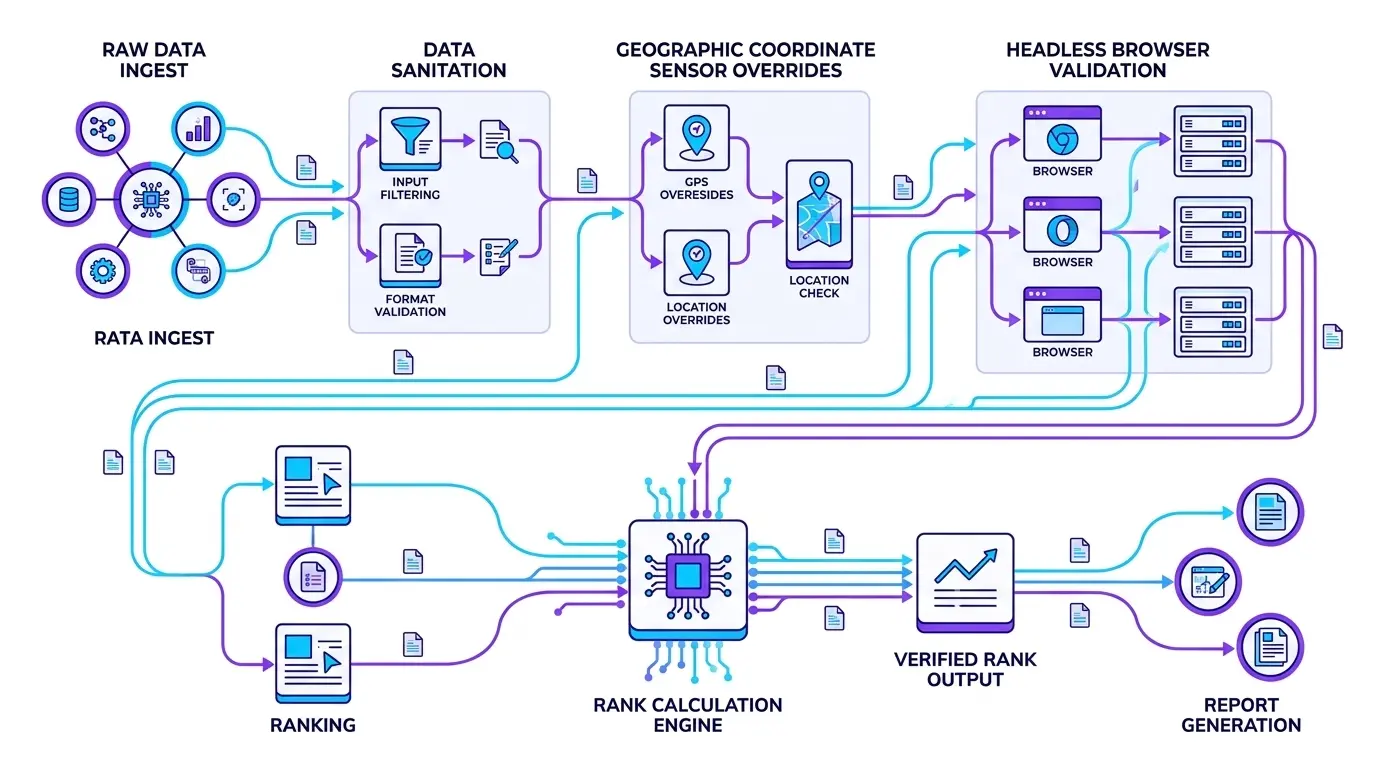
How to Check Google Ranking Without Cache Bias in 6 Operational Steps
- Purge local browser storage: Open developer tools, clear all site cookies, wipe indexedDB storage, and unregister lingering service worker scripts to eliminate historical tracking tokens. This neutralizes client-side association arrays and resets device-level query profiling.
- Initialize a disconnected guest instance: Launch a fresh guest window rather than relying on standard incognito sessions that inherit system-level DNS resolver configurations. Complete session isolation prevents underlying browser profiles from sharing network cache registries.
- Append the de-personalization URL string: Construct target query URLs using the
&pws=0parameter string to actively disable Google account historical ranking adjustments. This server-side instruction forces the engine to bypass user-specific entity preference weights. - Emulate target geolocations via developer sensors: Access Chrome DevTools Sensors panel to override latitude and longitude coordinates with neutral or target market values. This bypasses ISP-level routing biases and exposes region-agnostic index positioning.
- Correlate with Google Search Console performance tables: Cross-reference live query observations with aggregate 28-day Search Console performance datasets to verify baseline impression weighted positioning. Evaluating macro data points filters out localized temporal SERP testing fluctuations.
- Deploy autonomous tracking infrastructure: Connect automated monitoring agents through Scalnex AI Smart Keyword Tracking to run continuous, depersonalized queries across multiple geographies. Eliminating manual operational bottlenecks ensures consistent visibility data without client-side bias.
Rank Verification Pitfalls: Common Biases in Manual SERP Auditing
- Assuming Private Browsing Guarantees Anonymity: Testing via private windows only suppresses client-side history storage while completely leaking local IP and DNS resolver data. Upstream edge servers continue delivering location-weighted rankings directly to the machine.
- Conflating Single-Query Desktop Results with Dual-Engine Visibility: Manual audits overlook multi-intent query fan-out models leveraged by generative AI search systems. Real performance requires measuring visibility across both static index listings and generative conversational syntheses.
- Relying Exclusively on Legacy Diagnostic Suites: Static third-party ranking databases suffer from periodic data lag and passive reporting delays. These platforms capture static snapshots rather than reflecting real-time algorithmic entity shifts.
- Over-indexing on GSC Average Position Without Segmentation: Evaluating raw average position metrics without device and geographic filtering distorts reality. For deeper insights on documentation and ranking evaluations, examine official guidance on Google Search ranking systems.
Transitioning from Manual Verification to Autonomous Visibility
Engineering and marketing teams waste hundreds of hours executing manual, flawed rank audits. The technical overhead of configuring isolated sessions, managing proxy rotations, and overriding sensor coordinates creates severe operational friction. High-velocity brands require dynamic indexing verification rather than repetitive human audits.
Scalnex AI resolves manual auditing debt by deploying autonomous AI agents that run non-personalized, multi-region keyword audits programmatically. Transition your team to modern automated rank tracking solutions to access clean ground-truth visibility data without operational drag.